








Caribbean Weather Overview
The Caribbean is a region lying in the midst of the Atlantic Ocean and the Caribbean Sea consisting of over 7000 islands. Sitting North of South America and South of North America (try that for a mouthful!) the region as a whole observes a tropical climate which varies slightly as you head further north or south, east or west. While the conditions vary island to island, you can basically sum up the conditions by saying that temperatures are moderate, there is little seasonal variation and the climate makes for a near perfect beach holiday destination. (near perfect being the operative words as the area is prone to tropical storms)
If you want a moderate climate, days that are abundant with sun and sea, white sandy beaches and a laid back approach to life then the island escapes of the Caribbean will definitely be your cup of tea. (or coconut juice!)
The weather in the Caribbean is largely moderated by the Gulf Stream and the local trade winds. The Gulf Stream keeps the area warmer by bringing a warm current up from the Gulf of Mexico, which ensures that in winter the temperatures remain mild and very rarely drop below 10 degrees.
The trade winds come into play most noticeably in summer as they provide a welcome break from the scorching summer sun. Blowing in an east west direction the winds wash over the island in the afternoon cooling the region and providing a relaxing and pleasant ocean side environment keeping temperatures a few degrees lower than if the winds werenât present.
Acting as a 3200km break that separates the Atlantic Ocean from the Caribbean Sea, the West Indies (these days more commonly known as the Caribbean) can be best divided into four smaller geographical regions:
-The Bahamas, lies in the north of the region, nearest to the United States, known as the gateway to the Caribbean.
-The Greater Antilles is the North West, comprised of the largest islands and independent nations of Cuba and Jamaica and also Puerto Rico and Hispaniola.
-The Leeward Islands which lie in the northern part of the lower Antilles is comprised of the main islands of Antigua, Guadeloupe, Montserkat, Saint Kitts and Nevis and the Virgin Islands.
-The Winward Islands which lie south of the leeward islands and nearer to the South American coast is home to the islands of Dominica, Grenada, Martinique, Saint Lucia and Saint Vincent.
Northern Caribbean
The Bahamas
The Bahamas is the northern most region of the Caribbean, located in the Atlantic Ocean north of the Caribbean Sea. The archipelago of 700+ islands lies southeast of Florida and north of Cuba.
The Bahamas is all about sun, sand, surf and relaxation. The northern islands of the Bahamas, including the main island of Grand Bahama island and the smaller island of Abaco are the only part of the entire Caribbean region that donât like within the tropics, so these areas have a tendency to be about 5 degrees cooler than the rest of the islands and their climate is characterized by subtropical conditions.
The weather in the remainder of the Bahamas is tropical, and is largely influenced by the waters of the Gulf Stream, particularly in the winter. The Gulf Stream is a local Atlantic current which originates in the Gulf of Mexico and brings warmer temperatures up into the region, ensuring temperatures are a few degrees warmer than areas not influenced by the current. The Bahamas doesnât really experience any temperature extremes and is classed as a tropical maritime climate which is characterized by tropical conditions and a narrow annual range in temperatures.
The trade winds that blow east to west through the islands, and the entirety of the Caribbean, have a moderating effect and keep the temperatures mild ensuring the weather is warm and agreeable for much of the year.
June through until November is Hurricane Season in the Bahamas so be sure to check the up to date weather forecasts before planning a trip to the region. Many hotels in the area offer excellent refund policies in the advent of an unexpected hurricane so try not to let the weather deter you if planning to travel in this time.
The islands basically see two seasons, summer and winter. Summer runs from May through until September and is generally fairly hot and quite muggy; this is also the rainy season in the region so the summer months are quite humid. Average yearly humidity sits at 65% but is considerably higher throughout summer.
The temperature range throughout the season is about 27 to 32 degrees, with June to September being the hottest months which see daily temperatures of 27 to 28 degrees. The previously mentioned trade winds keep the temperatures slighter cooler and it is very rare for the mercury to rise above 38 degrees.
âWinterâ runs from October to April and plays host to the islands peak season. Apart from the final month of hurricane season (October) the weather during winter is idyllic. In addition to being slightly cooler than summer the period it is also considerably drier and the majority of the annual rainfall occurs in the summer months. The average temperature throughout winter ranges from 21 to 27 degrees, December to February being the coolest seeing daily averages of a mild 21 degrees.
Due to its location near the equator there isnât a large variation in daily sunrise and sunset year round and the sun can often feel like it is belting down on you as it lies directly above you. While the more northern and western islands of the Bahamas remain slightly cooler than the southern islands, the islands as a whole average about 8 hours of uninterrupted sun per day and this occurs 310 days of the year- obviously the reason why in 1760 George Washington called the Bahamas the âislands of perpetual June.â
While the barometer can see highs in excess of 30 degrees in the height of summer and the humidity in the wet season can occasionally get uncomfortable it is welcoming to know that there is never more than a 5 degree difference between air and sea temperature so you can take refuge in the utopian crystal waters that the Bahamas are so famed for.
If venturing to the Bahamas head to Granada Bahama Island or New Providence if you want to mingle amongst larger numbers of tourists and experience a true beach side resort holiday. However if you want to see a slightly more authentic side of the region and areas that may not cater as much for tourism then head to the smaller islands of Andros, Eluthera, Cat Island, Exumus, San Salvador or the Berry Islands.
The Greater Antilles
Lies to the west of the Bahamas and made up of the larger islands of Cuba, Jamaica Puerto Rice and Hispaniola. The climate in this region is fairly similar to that of the Bahamas, though as you head further south temperatures heat up and the climate becomes more tropical.
Cuba is the largest island in this area, with its capital city of Havana hosting a population of close to 2.6 million. The island has a tropical climate which sees a temperature range of 22 degrees in winter to 28 degrees in summer. The summer months of June to October are the rainy season and see on average 7 to 10 days of rain each month. Rainfall is generally heaviest in October and lightest from February through April. In Havana the summer months see an average high of 31 degrees and the winter months play host to a mild enjoyable high of 26 degrees.
Many of the larger islands in the Caribbean are quite mountainous which has the affect of creating local temperature differences which are dependant on rising altitude. As you increase in altitude, temperatures fall and rainfall increases. Cuba is no exception, with the Sierra Maestra mountain range lying at its south end.
Jamaica is the third largest island in the Caribbean, after Hispaniola and Cuba. The island has the Blue Mountains in its interior and this range is surrounded by a narrow coastal plain. Most of the countryâs major towns and cities are located on the coast including the capital city of Kingston. The climate in Jamaica is again tropical, hot and humid with the higher altitudes having a more temperature, cooler climate. On the south coast there are drier plains which see less rain as a result of being shadowed and protected by the inland mountain ranges.
Jamaica, as well as Cuba and Hispaniola all lie in the hurricane belt of the Atlantic Ocean. The islands as a result have experienced significant storm damage in the past. In recent years the islands have been badly affected by Hurricane Ivan and Hurricane Wilma, which have devastated parts of the islands resulting in loss of life, loss of homes, severe flooding and wind damage and the need for significant rebuilding of homes and infrastructure. It is best to take note that these destructive storms are most common in the months of September and October.
Within this region you will also find the picturesque holiday resort of the Cayman Islands, home to the popular island of Grand Cayman. Tourism accounts for 70-75% of the annual GDP of the Cayman Islands most of which is harbored in Grand Cayman, so it is not hard to believe that the area is home to a idyllic climate, perfect sandy beaches and amazing crystal clear water. Unfortunately, Grand Cayman was devastated by Hurricane Ivan in 2004 which destroyed 80% of the islands buildings however the large majority of the island has been since repaired.
Central Caribbean
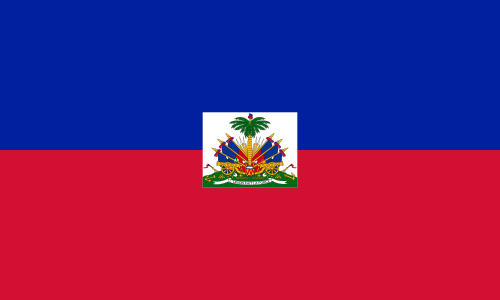
Hispaniola is the second-largest island of the Antilles, lying between the islands of Cuba and Puerto Rico with Jamaica to its south west. The island is comprised of Haiti, which is a French and Creole speaking country that occupies the islands west side, and the Dominican Republic which is situated on two thirds of the island on the eastern side.
Like neighbouring areas, the island as a whole experiences a tropical maritime climate characterized by a narrow temperature range, mild dry winters and hot wet summers. The mountainous regions in both Haiti and Dominican Republic are much cooler than the coastal plains, but the average annual temperature range across the whole island is about 25 degrees in winter to 30 degrees in summer
Haiti, on the west side, has high biodiversity, particularly when considering its relatively small size. Itâs mountainous topography and varying elevations means that each elevation harbors a different microclimates each playing host to its own unique fauna and flora. The country has amazing scenery, including luscious green cloud forests in which the cloud cover lies so low that it spreads in amongst the fertile mossy tropical forests, making for an eerie and fairytale-esque surrounding. These forests are set against high mountain peaks and palm tree-lined beaches and contrasted with the cactus scattered arid deserts.
The Dominican Republic has four main mountain ranges, with the Cordillera Central range being the largest and home to the four highest peaks in the entirety of the West Indies. There are various other mountain ranges spread throughout the country and as a Republic boasts a number of fertile valleys and plains, a result of the ranges running parallel to each other.
As a result of the mountain ranges in the centre of the island, the north coast of the Dominican Republic sees rain throughout the entirety of the year and there isnât really a dry season. The south coast, because shadowed by the mountains, is considerably drier and sees a greater distinction in precipitation across seasons. Santo Domingo is the countryâs capital located on the southern coast of the island at the mouth of the Ozama River.
In Santo Domingo the average temperature varies very little, this is due to the tropical trade winds which help mitigate the heat and humidity throughout the year. December to January sees with city at its coolest and July and August are the warmest.
Puerto Rico
Puerto Rico is the most easterly lying of the larger Caribbean Islands. As the island is quite mountainous this has an affect on the weather conditions. Like the Dominican Republic the centre and the north coast of the island is exposed to the north east trade winds which consequently means these areas are much wetter than their southern counterparts.
The islands capital of San Juan lays on the north coast of the island so therefore receives rainfall for much of the year. The average maximum temperature range is 27 degrees in the winter to 30 degrees in the summer, and the average minimum range is 21 degrees to 24 degrees. June through to October is the hottest, while there isnât a huge difference between this period and the âwinterâ months.
February and March do see the least rainfall which make these months one of the most popular times to visit. The island as a whole sees an average annual temperature of 28 degrees, and the area becomes warmer if the local winds are blowing from the south- this will have the affect of increasing the daily high by up to 5 degrees.
Southern Caribbean
The south of the Caribbean is home to the Westward and Leeward Islands. These names came about because of the islandsâ location in the path of the prevailing trade winds.
The Windward Islands are called such because when the region was first being explored they were more windward than the Leeward Islands to sailing ships arriving in the New World. Windward is the direction that the wind is blowing from, and as the prevailing trade winds blow northeast to southwest, this lead to the Windward and Leeward islands being named as such.
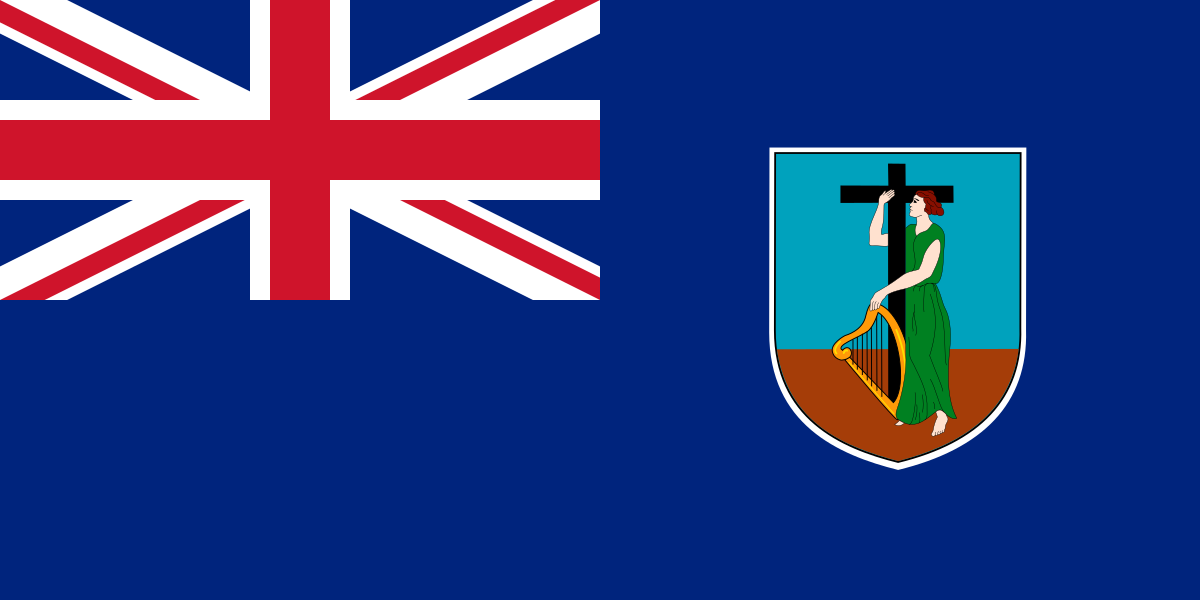
The main Windward Islands are Martinique, Saint Lucia, Saint Vincent, Barbados, Grenadines, Grenada, Dominica and the main Leeward Islands are the US and British Virgin Islands, Anguilla, Saint Kitts, Antigua and Barduba, Montserrat, Guadeloupe, Dominica and Saint Martin (among others).
One of the primary differences between the Windward and Leeward islands are their location in the hurricane belt. The Windward Islands, in particular the most southern islands of Barbados, Grenada and St Lucia are rarely hit by the devastating hurricanes that hit the more northern regions. Barbados, for example, is only hit by hurricanes every 25to 30 years- though the area was damaged by 2004âs Hurricane Ivan.
The Windward region basically plays host to a dual season climate- wet and dry. The wet season falls from about May/June through until December and the dry season December to May. Average temperature across the islands sits at 27-28 degrees, with temperatures in excess of 30 degrees no uncommon in the summer months, though relief is welcomed by the local trade winds which cool the islands in the afternoons.
The Windward Islands have a moderate tropical climate which varies only slightly from island to islands depending on their proximity to the South American mainland and the specific geography and topography of each island.
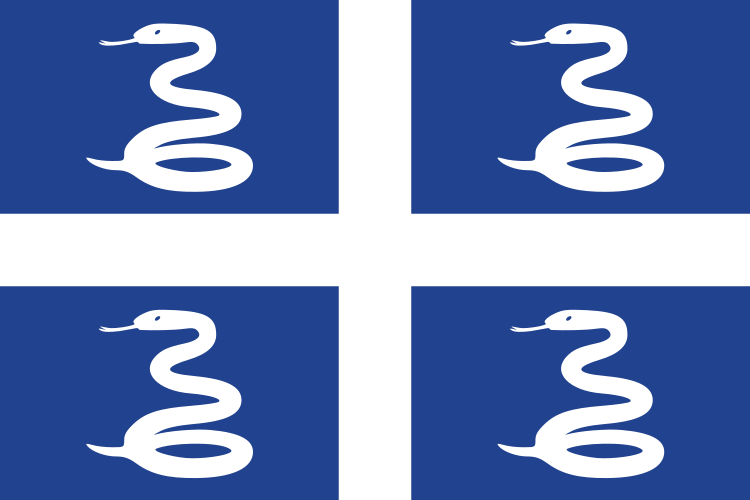
Barbados for example is a relatively flat island, it consequently plays host to a fairly standard tropical climate with a dry season from December to May and a wet season from June to November. Martinique, on the other hand, is a mountainous and lushly forested island, so it will record greater average rainfall as the precipitation increases with altitude. The famous volcanic mountain of Mount Pelee lies in Martiniqueâs centre, resulting in a dramatic difference between the north coast and south coast beaches. Northern beaches are coated in grey and black sand, a stark contrast from the perfect white sandy beaches of the south coast.
Grenada, like the rest of the region, hosts two seasons- wet and dry. The Dry season is cooled by the local trade winds and the island is fortunate enough to have only suffered three hurricanes in the last 5 decades- a result of its privileged location on the southern edge of the hurricane belt.
The Leeward Islands are home to the Virgin Islands which lie in the path of violent tropical hurricanes which are most common between August and October. Generally though the conditions in the Leeward Islands is fairly similar to the remainder of the Caribbean, with rainfall increasing on the islands with high altitudes, and the heat moderated by the trade winds.
Typical daily maxima sits at around 32 °C in the summer and 29 °C in the winter. Rainfall averages about 1150 mm per year, increasing in the hills and lower in the coastal regions. The wettest months on average are September to November and the driest months on average are February and March. Keep in mind that the hurricane season runs from June to November.
The Leeward Islands, much like many islands within the Caribbean are home to areas of great biodiversity and microclimates. For example, Saba, a small island in the Netherlands Antilles is home to woodland forest with ferns and damp soil, and an abundance of mango trees. The island of Saint Kitts has an interior region that is too steep for anyone to live there, and thus experiences greater rainfall than other islands. Redonda is an uninhabited island which protrudes steeply from the sea and is nothing more than remnants of the cone of an extinct volcano, therefore consisting mostly as sheer cliffs.